Welcome to the official website of San Dong SanXiang Steel Co., Ltd!
SANXIANG STEEL
High-Quality Steel Products with ISO-Certified Standards.
Fast Global Delivery
|
|
Information Hotline: +86 13370978335 +86 13396352335 |




Ductile iron pipe
Interview
Ductile Iron Pipes: The Reliable Backbone of Modern Pipeline Systems
In the realm of infrastructure development, the choice of pipeline material plays a pivotal role in ensuring the efficiency, durability, and safety of fluid transportation networks. Among the various options available, ductile iron pipes (often abbreviated as DI pipes) have emerged as a preferred solution for water supply, wastewater management, and industrial fluid conveyance. This article delves into the key characteristics, manufacturing processes, performance advantages, and applications of ductile iron pipes, highlighting why they remain a cornerstone of modern pipeline systems.
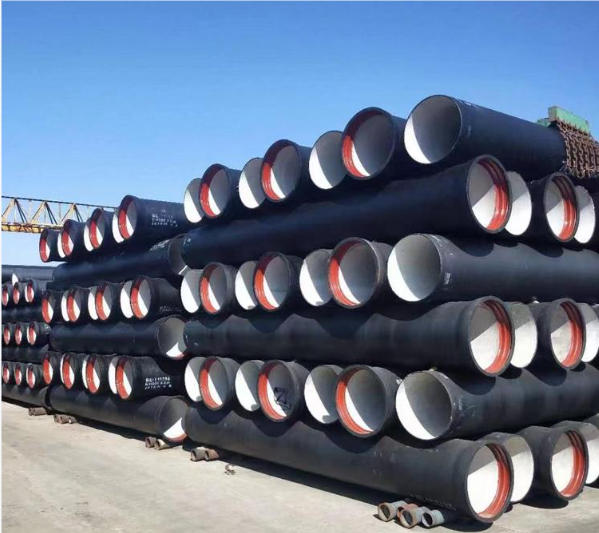
1. What Are Ductile Iron Pipes?
Ductile iron, a modified form of cast iron, is produced by adding small amounts of magnesium or cerium to molten cast iron. This process transforms the brittle graphite flakes in traditional cast iron into spherical nodules, significantly enhancing the material’s mechanical properties—particularly its ductility, tensile strength, and impact resistance. Ductile iron pipes are cylindrical structures made from this advanced material, designed to transport liquids (such as water, sewage, and industrial chemicals) or gases over long distances with minimal maintenance.
Unlike their cast iron predecessors, which were prone to cracking under pressure or external impacts, ductile iron pipes combine the strength of cast iron with the flexibility of steel. This unique balance makes them suitable for a wide range of environmental conditions, from urban underground networks to rural water distribution systems.
2. Manufacturing Process: Precision and Durability
The production of ductile iron pipes follows a rigorous, multi-step process to ensure consistency and quality. Here’s a simplified overview of the key stages:
Step 1: Melting and Alloying
High-quality iron ore, scrap iron, and other additives (including magnesium for nodularization) are melted in a blast furnace or electric arc furnace at temperatures exceeding 1,500°C. The molten metal is carefully monitored to achieve the desired chemical composition, which directly influences the pipe’s mechanical properties.
Step 2: Centrifugal Casting
The most common method for manufacturing ductile iron pipes is centrifugal casting. In this process, molten ductile iron is poured into a rotating metal mold (typically made of steel) that spins at high speeds (up to 3,000 rpm). The centrifugal force distributes the molten metal evenly along the mold’s inner surface, creating a uniform wall thickness and eliminating air bubbles or impurities. This results in pipes with exceptional structural integrity and dimensional accuracy.
Step 3: Heat Treatment
After casting, the pipes undergo heat treatment to further refine their properties. The process typically involves annealing (heating the pipes to a specific temperature and cooling them slowly), which reduces internal stress, improves ductility, and enhances corrosion resistance. Some pipes may also undergo quenching and tempering for specialized high-pressure applications.
Step 4: Surface Coating and Protection
To extend their service life, ductile iron pipes are coated with protective layers. The most common internal coating is cement mortar, which prevents corrosion from aggressive fluids (such as acidic wastewater) and ensures smooth fluid flow. Externally, pipes are often coated with zinc (hot-dip galvanization) or epoxy, which shields them from soil corrosion, moisture, and chemical damage. Additional layers, such as polyethylene sleeves, may be added for extreme environmental conditions.


 Copy product links
 Long by picture save/share
INQUIRY


Add Successfully
INQUIRY
Add Successfully
SANXIANG STEEL

Contact Us

Shandong Sanxiang Steel Co., Ltd
telephone:+86 13370978335 Sales Hotline:+86 18974511749
Add:Room 207, Building 10, Xingguang International Financial Center, Dongchang Road, Dongcheng Street, Liaocheng Economic and Technological Development Zone, Shandong Province


Follow QR code Follow QR code
Copyright ©2023 All Rights Reserved Shan Dong SanXiang Steel Co, Ltd
